

University rankings play a crucial role in the global education landscape. They serve as a benchmark for academic excellence, guiding prospective students, faculty, and researchers in making informed decisions. For Nigerian universities aspiring to achieve world-class status, climbing the ranks is essential. This blog post builds on our previous discussion on “The Making of a World-Class University,” where we explored the critical components that elevate institutions to global prominence. The ranking is a significant metric in this journey, offering a tangible measure of progress and standing.
According to a report written by Prof. Okebukola, it was stated that as far back as the year 2001 [1], the National Universities Commission (NUC) had instituted a ranking mechanism aimed at fostering competition among Nigerian universities to stimulate quality. This initiative, detailed in the report, proved successful in creating healthy rivalry among institutions, which in turn led to improved performance.
The initial ranking methodology employed during this period relied heavily on scores derived from program accreditation conducted by the NUC. This accreditation metric was comprehensive, taking into account various factors such as staff quality, curriculum relevance, adequacy of facilities, curriculum delivery effectiveness, funding levels, and employer ratings of graduates.
Over the years, this ranking methodology has undergone several revisions and refinements to enhance its effectiveness and relevance. The most recent iteration of the ranking methodology was developed in 2022, reflecting ongoing efforts to adapt to changing educational landscapes and international best practices in university assessment.
In addition to internal rankings by bodies like the National Universities Commission (NUC), Nigerian universities increasingly turned their focus outward to international ranking systems. Embracing metrics set by global authorities such as Times Higher Education (THE) and QS World University Rankings, institutions sought to benchmark themselves against international standards. This shift encouraged transparency, fostered global competitiveness, and provided valuable insights into areas needing improvement, ultimately aiming to elevate Nigeria’s higher education sector on the global stage.
In this post, we focus specifically on the Times Higher Education (THE) Rankings, the most closely watched ranking system by Nigerian universities. THE offers three distinct rankings that are particularly relevant to Nigerian institutions: the World University Ranking, the Impact Ranking, and the Sub-Saharan Africa University Rankings.
The THE World University Ranking 2024 [1] includes 1,906 universities across 108 countries and regions. This ranking evaluates universities based on five areas:
- Teaching (the learning environment)
- Research Environment (volume, income, and reputation)
- Research Quality (citation impact, research strength, research excellence, and research influence)
- International Outlook (staff, students, and research)
- Industry (income and patents).
The THE Impact Ranking [2] measures universities’ progress in achieving the Sustainable Development Goals (SDGs). It evaluates how institutions contribute to sustainable development across various domains such as health, education, gender equality, and environmental sustainability. This is calculated by summing the score of SDG 17 and Top scores from three other SDGs.
The THE Sub-Saharan Africa University Rankings [3] focus on universities addressing the biggest challenges in the region. This ranking uses five pillars:
- Resources and Finance
- Access and Fairness
- Teaching Skills
- Student Engagement
- Africa Impact
By honing in on the performance of Nigerian universities within the THE framework, we aim to shed light on their current standing, progress, and areas for improvement. Understanding these rankings is not merely about prestige; it is about identifying pathways to enhance educational quality, research output, and societal impact. This focus is particularly timely as Nigerian universities seek to bolster their global competitiveness and contribute meaningfully to national and regional development.
Let’s Investigate Nigerian Universities progress in each of the rankings:
The World University Rankings
Nigeria first emerged in the Times Higher Education (THE) World University Rankings (WUR) in 2016 [2], with the University of Ibadan being the sole representative from 2016 to 2018. By 2019, this landscape began to change as two more universities joined the ranks: Covenant University and the University of Nigeria, Nsukka. This growing interest and competitiveness in the rankings have significantly accelerated, such that by 2024, 15 Nigerian universities were featured in the WUR Rankings, and 24 additional institutions were categorized in the reporter category, indicating their potential to be ranked in the coming years (see Figure 1).
The metrics used in evaluating the WUR are notably more comprehensive compared to the Impact Rankings and the Sub-Saharan Africa Rankings. These criteria encompass a broad range of factors, including teaching (the learning environment), research environment (volume, income, and reputation), research quality (citation impact, research strength, research excellence, and research influence), international outlook (staff, students, and research), and industry income and patents. While these metrics may present a challenging hurdle, they are not insurmountable, even for relatively young universities. With strategic focus and concerted efforts in these areas, Nigerian universities can aspire to climb higher in the global rankings.
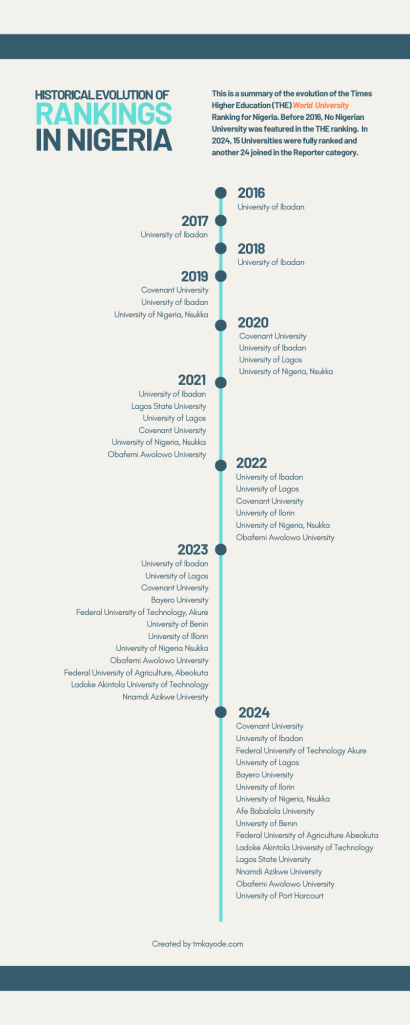
Figure 1: Evolution of Nigerian Universities Performance in THE World Universities Ranking
The Impact Rankings
The Impact Ranking started in 2019, and at that time, only two Nigerian universities were included. Fast forward to 2024, and 26 Nigerian universities have made it into the rankings. The Impact Ranking offers a level playing field for universities worldwide because it recognizes efforts made towards achieving the Sustainable Development Goals (SDGs) on campus. Established in 2015 with a target of 2030, the SDGs provide a comprehensive framework for universities to contribute to global sustainability and development [3].
The Impact Ranking presents a “low-hanging fruit” that young universities can aspire to achieve as they continue to develop their processes. By focusing on fulfilling the SDGs, these institutions can gain international recognition while evolving to meet current and future demands. This ranking not only acknowledges the positive contributions of universities to society but also provides a pathway for emerging institutions to establish their relevance and build a strong foundation for further advancement in other ranking categories.
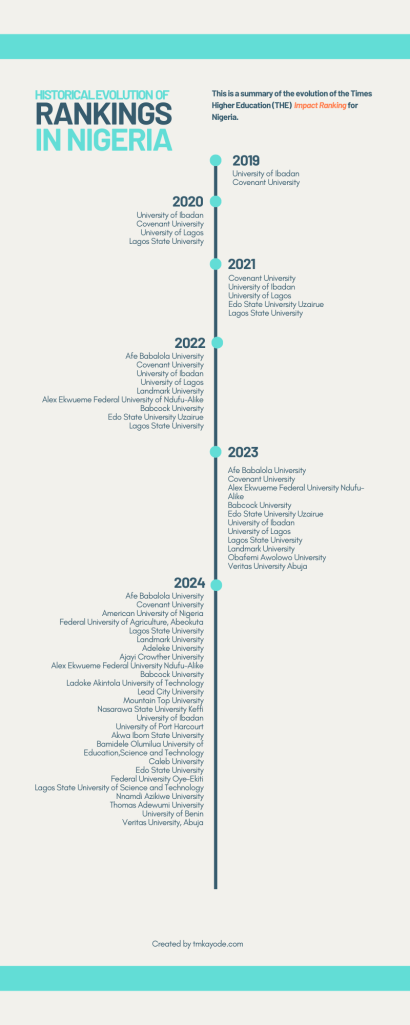
Figure 2: Evolution of Nigerian Universities Performance in THE Impact Ranking
The Sub Saharan African Rankings
So far, only the 2023 Sub-Saharan Africa (SSA) ranking has been published [4]. In this ranking, Nigerian universities constitute the highest percentage of represented institutions, making up 42 percent of the total. They are followed by universities from South Africa at 12 percent and Ghana at 7 percent. Despite this strong representation, only one Nigerian university made it into the top 10: Covenant University, which ranked seventh. The next highest-ranked Nigerian university is the Federal University of Agriculture, Abeokuta, which placed 26th.
It is also noteworthy that, even though South African universities account for just 12 percent of the overall number of ranked institutions, they dominate the top 10, making up 40 percent of this elite group.
Let’s ponder on this for a while
Concluding thoughts
While we must commend the laudable efforts of Nigerian universities to fight for and achieve recognition in international rankings, there remains a crucial need to translate these academic successes into tangible national development. Universities should play a pivotal role in driving national progress, and although healthy competition among institutions is beneficial, we must consider the broader impact on our country’s development. It is imperative to look inward, reflect on our past, and understand how we reached our current state. By doing so, we can create innovative solutions that will alter the trajectory of our future.
To move forward, we must address several key questions: How can we leverage collaborative national and regional partnerships to foster growth and development? How can we facilitate research that addresses Africa’s most pressing challenges? Moreover, how can we empower the next generation to succeed in areas where we have previously fallen short? Answering these questions will not only enhance the relevance of our universities but also ensure that their achievements contribute meaningfully to the broader goals of national and regional development. Through strategic planning, robust collaborations, and a steadfast commitment to excellence, Nigerian universities can become catalysts for positive change and sustainable development.
Alright, I have to stop here for now…
A lot is buzzing in my brain and I have been working on this for a while now.
It is time to stop and continue another time.
Till then …
If you would like more If you would like more actionable points for your University please fill out the contact form and we will reach out to you.


References
[1] https://www.chea.org/sites/default/files/2022-06/Okebukola.pdf
[2] https://www.timeshighereducation.com/world-university-rankings/2024/world-ranking
[3] https://www.timeshighereducation.com/impactrankings
[4] https://www.timeshighereducation.com/sub-saharan-africa-university-rankings
 T.M. Kayode
Leave a comment